I’ve spent more than twenty years working in transportation, much of it focused on helping communities create safer and more accessible options for active transportation. I’ve worked on bicycle and pedestrian plans, Complete Streets policies, bike share programs, and other efforts designed to give people more transportation choices. I also spent almost six years living in Auckland, New Zealand, where I regularly used an electric tricycle for everyday transportation.
Those experiences have shaped how I think about transportation, which is why I’ve found myself increasingly frustrated by New Jersey’s conversation about e-bikes.
Safety concerns are real, and there are certainly examples of reckless behavior (on all modes of transportation, by the way). My frustration comes from the fact that the more I listen to the conversation around e-bikes, the more it feels like we’re blaming e-bikes for conflicts that are often rooted in much larger transportation challenges.
What We're Really Responding To
What I keep seeing is a state responding to the symptoms of a problem while ignoring the root causes.
People complain about e-scooters on sidewalks. Drivers complain about cyclists in the roadway. Communities complain about e-bikes in parks.
Yet we spend very little time asking a simple question: Why are people choosing those spaces in the first place?
I see people running in the painted shoulder along a popular avenue near me all the time. Most aren’t doing it because they enjoy running next to traffic. They’re doing it because the roadway is often flatter and more predictable than sidewalks disrupted by tree roots and uneven pavement.
It’s human nature to evolve to the conditions around us.
E-scooter riders use sidewalks because traffic feels dangerous. Cyclists take the lane because there is no bike lane. People drive because, in many cases, we’ve made every other option inconvenient.
The choices people make are often a reflection of the options available to them.
What often gets overlooked in these conversations is that transportation policy is never neutral. When communities are designed in a way that effectively requires car ownership to participate fully in daily life, the cost burden falls hardest on those with the fewest resources. Transportation becomes one of the largest household expenses, and the ability to access jobs, schools, healthcare, recreation, and even social connections becomes tied to whether someone can afford to own and maintain a vehicle.
That’s why transportation choice matters. A system that supports only one way of getting around doesn’t expand opportunity; it limits it. People should be able to choose the mode that works best for their trip, their budget, and their circumstances. Safe walking, biking, rolling, transit, and micromobility options aren’t luxuries. They are part of creating communities where more people can participate fully in everyday life.
When people are effectively forced into car ownership because other options are unsafe, unavailable, or impractical, the result is not transportation freedom but transportation dependence. Yet instead of expanding those options, much of the public conversation focuses on restricting where people can use the alternatives that already exist. We seem to have endless energy for telling people using micromobility where they don’t belong. Not in the street. Not in the park. Not on the path.
At some point, we need to answer a simple question: Where exactly do we want them to go?
The Youth We’re Talking Past
Much of the conversation around e-bikes eventually circles back to teenagers. Mention e-bikes at a public meeting, community forum, or on social media, and it often doesn’t take long before someone brings up kids popping wheelies in the middle of the street. The image has become shorthand for the entire debate, even though it represents only a small population of those who actually use e-bikes and usually it’s not even an e-bike at all but rather an e-moto.
I’m not suggesting this reckless behavior should be ignored. I am suggesting that we ask a different question:
How can we provide more safe and protected spaces for young people to get around?
I regularly see young people riding low-speed e-bikes to school. Sometimes in the street but sometimes on the sidewalk. They aren’t racing or causing problems. They’re simply getting from one place to another.
We spend a lot of time talking about where these young people shouldn’t ride and far less time creating places where they should.
If we want teenagers off busy roads, out of conflicts with pedestrians, and away from situations that make everyone uncomfortable, then we need to provide places where they can travel safely and independently. That’s a transportation question, not simply an enforcement question.
What’s interesting is that many of the same people who object to e-bikes would have little issue with a teenager making that same trip on a traditional bicycle. The concern isn’t that a young person is traveling independently. The concern is that they’re doing it on an e-bike.
Yet for many families, an e-bike makes trips possible that might otherwise be too long, too difficult, or impractical by bicycle. It expands the distance a young person can comfortably travel and reduces the need for parents to drive every trip.
Parents also need to be part of this conversation. Many of the high-powered vehicles generating concern are not being purchased by teenagers. Adults are buying them. Yet much of the public debate focuses almost entirely on youth behavior rather than parental responsibility, rider education, or creating safer places to ride.
We’re placing responsibility on the people with the least power to shape the system while overlooking the people with the most.
The "Just Get a Car" Mindset
A few months ago, while staffing an outreach event, someone told me that cyclists should “just do what the rest of us do and get cars.”
The comment has stayed with me because it revealed an assumption that sits underneath many transportation conversations here in New Jersey: driving is the default and every other mode exists on the margins.
If everyone gets a car, congestion gets worse, parking becomes harder to find, transportation costs increase, and our climate goals become harder to achieve.
New Jersey continues to grow. Communities want new residents, new businesses, and stronger tax bases. If every new resident arrives with a car and every new trip requires driving, congestion will continue to worsen.
At some point, the math will stop mathing.
I’ve lived car-free in New Jersey, California, and New Zealand. Eventually, I bought a car because my circumstances required it. Even now, I try to be intentional about when I use it and whether a trip really requires me to get behind the wheel.
I would love to bike more where I live, but there isn’t a single bike lane anywhere in my city and very few in the neighboring communities.
Like most people, I make transportation decisions based on the environment around me. If I don’t feel safe riding somewhere, I’m less likely to ride there. The route is only part of the equation. I also have to think about whether there’s a secure place to lock my bike and whether the trip makes sense for what I need to accomplish that day.
Those practical considerations influence people’s choices just as much as the trip itself.
A Different Way to Think About Mobility
During the almost six years I lived in Auckland, New Zealand, I owned an electric tricycle (Trinity) and used it regularly for my everyday trips. Auckland wasn’t perfect. Drivers could be hostile there too. One of my supervisors had coffee thrown on him while riding in a bike lane simply because the driver didn’t like that he was able to pass him in traffic.
So, this tension existed there too. The difference was the conversation. When I worked at Auckland Transport, walking, biking, and micromobility were increasingly viewed as part of a larger transportation strategy. The goal wasn’t to get everyone walking or biking. The goal was to give people more options for shorter trips and reduce pressure on the roadway network. The division I worked in was called Sustainable Mobility, which reflected a simple reality: the transportation network could not be sustained through driving alone. If communities were going to grow and thrive, people needed more ways to get around. Pedestrians deserve to feel safe. Cyclists deserve to feel safe. People using e-bikes and e-scooters deserve to feel safe.
The goal of a safe and complete transportation system is not to decide which users belong and which do not. The goal is to create spaces that reduce conflict and allow different people to move safely through their communities.
Too often, our response to conflict is exclusion. If we simply remove one user group from the equation, we’re not solving the underlying problem. We’re just relocating it. Someone riding an e-scooter still needs a place to ride. Someone riding a bicycle still needs a place to ride. Someone using an e-bike still needs a place to ride.
The conversation often focuses on where these users shouldn’t be. What we’re not asking is where they should be. Until we answer that question, we’ll continue moving conflicts around instead of solving them.
It’s also worth asking a broader question: Why has micromobility become so popular in the first place? The growth of e-bikes, e-scooters, and other micromobility options reflects something important. It reflects a growing demand for transportation that is affordable, flexible, convenient, and supports healthier lifestyles. During the COVID-19 pandemic, many people rediscovered walking and biking as ways to exercise, relieve stress, and feel connection in their communities. With fewer cars on the road, people felt more comfortable being outside, and trails, parks, and neighborhood streets filled with residents looking for opportunities to move.
What that period revealed was not a temporary trend. It revealed demand. People want convenient ways to incorporate physical activity into their daily lives without needing a gym membership or a structured workout. They want transportation choices that support their health while also helping them accomplish everyday trips. Increasingly, people are looking for transportation options that align with their values, whether that’s improving their health, reducing their environmental impact, saving money, or simply having more choices about how they move through their communities.
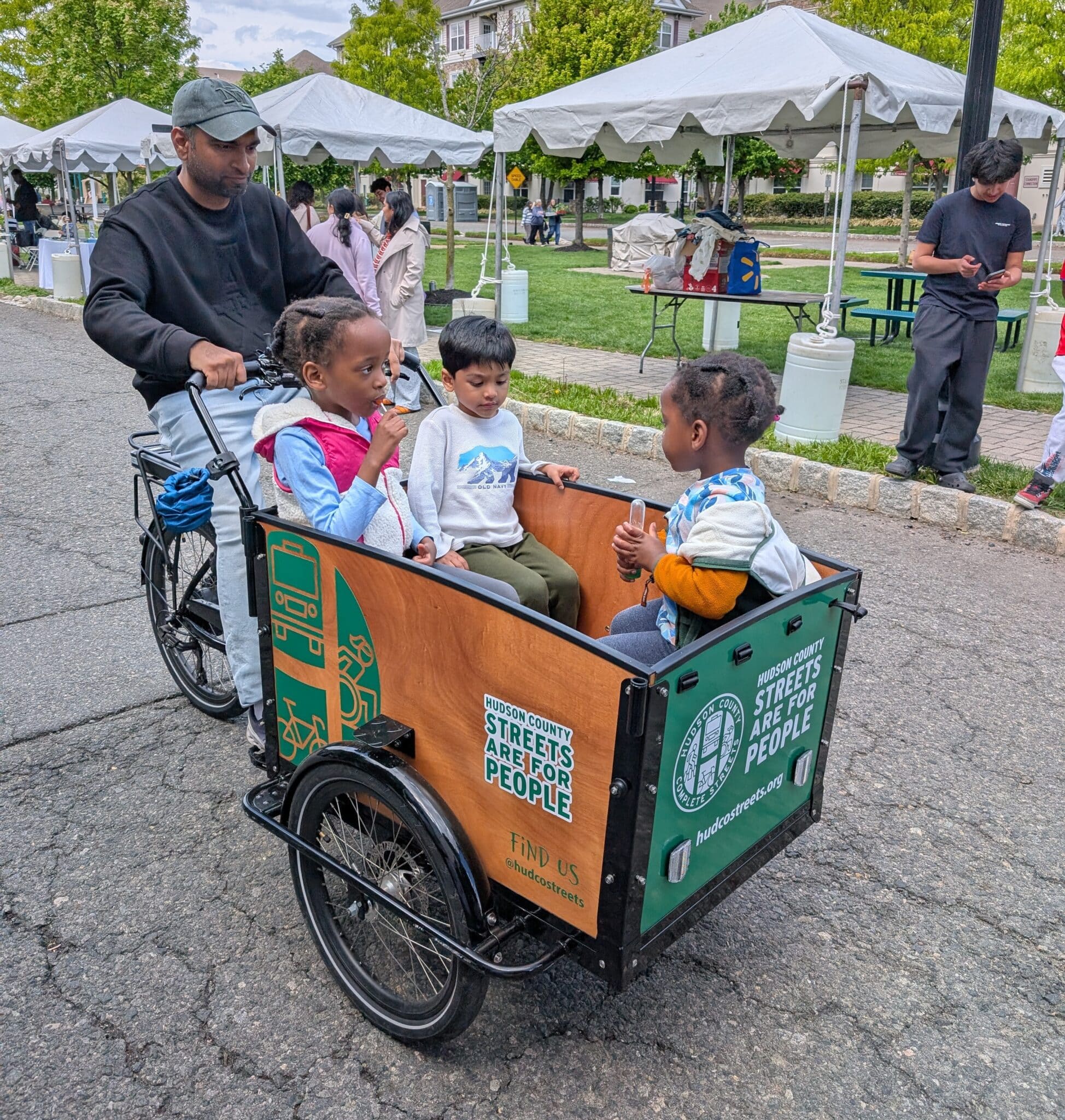
Transportation remains one of New Jersey’s largest sources of greenhouse gas emissions, and many residents want the ability to make choices that align with a healthier environment. Micromobility is also helping address one of the challenges of modern development patterns. In communities where destinations have been spread farther apart and daily life has become increasingly car-dependent, e-bikes are making trips possible that might otherwise require driving. The rise of bike buses across the state is another example of this demand. Families are demonstrating that many children can travel actively and safely when supportive infrastructure and community support exist.
Rather than viewing the growth of micromobility as a problem to control, we should view it as information. It tells us that people are looking for alternatives. In that sense, e-bikes are part of the solution, not the problem. They are one of the solutions people are already choosing. The popularity of bike buses, e-bikes, and other forms of active transportation suggests that demand for these options is likely to continue growing. The question isn’t how we stop that growth. The question is how we support it safely and thoughtfully through better infrastructure, education, and policy.
Who E-Bikes Actually Serve
One of the challenges with the current debate is that e-bikes are often discussed as though they serve a single type of user.
In reality, they serve many.
They help teenagers get to school and activities. They help delivery workers earn a living. They help residents connect to transit. They help people who cannot afford a car for every trip. They help older adults and people with disabilities continue traveling independently. These aren’t abstract policy categories. They’re real people making transportation decisions within the options available to them. When we talk about e-bike legislation, we’re not simply regulating a vehicle. We’re shaping how people move through their communities.
There is also an environmental justice dimension to this conversation. Communities that have historically experienced the greatest transportation cost burdens are often the same communities dealing with higher levels of air pollution, limited transportation choices, and greater exposure to traffic-related harms. For many residents, an e-bike is not a recreational device. It is an affordable transportation tool that expands access to opportunity. That’s one reason broad legislative responses concern me. Not because safety isn’t important, but because policies can have unintended consequences. New restrictions, requirements, or classifications may seem straightforward on paper, but they can create real burdens for people who rely on e-bikes as part of their daily lives.
They can also discourage people who might otherwise choose an e-bike in the first place. At a time when we’re trying to reduce congestion, expand transportation choices, improve public health, and support more sustainable ways of getting around, we should be careful about creating barriers that make those choices less appealing or more difficult to navigate. Uncertainty around regulations and future requirements can cause people to delay or abandon a purchase altogether, limiting access to a transportation option that could help them get to work, connect to transit, run errands, or simply become less dependent on a car.
If equity is truly part of the conversation, we should be asking who benefits from these policies, who bears the burden, and whether we’re improving safety without creating new barriers to transportation.
A Better Path Forward
This is why investments in walking, biking, Safe Routes to School, trails, and first-mile/last-mile connections matter. Every person who chooses to walk, bike, roll, or take transit is one less vehicle trip on our roads. Fewer vehicle trips mean less congestion and fewer opportunities for the human errors that contribute to so many serious crashes. These investments aren’t amenities. They’re transportation infrastructure.
As legislators continue discussing e-bike policy, I hope we focus on the bigger picture. E-bikes may be the focus of the conversation, but they are also exposing gaps in our transportation system, not only in our infrastructure but also in how we think about transportation choice and respond to emerging forms of mobility.
Too often, we assume that providing a roadway is enough. Underneath that assumption is the belief that everyone has access to a car, can afford to own and maintain one, or wants to rely on one for every trip. The reality is that many people cannot afford transportation that way. Others cannot drive, do not have access to a vehicle, are unable to obtain a license, or simply do not want to rely on a car for every trip. Increasingly, people are looking for more transportation choices, not fewer. They want the flexibility to walk, bike, take transit, drive, use an e-bike, or ride an e-scooter depending on the trip they’re making.
A transportation system should be designed to serve people, not a single mode of travel. Even if only a small number of residents choose to walk, bike, roll, or use an e-bike, they should be able to do so safely and comfortably. Transportation choice should not be reserved for people who can afford multiple options. It should be available to everyone.
Until we’re willing to build a transportation system that reflects those realities, we’ll continue treating symptoms while ignoring the cause.