Written by Cathleen Lewis
New Jersey Bike & Walk Coalition Board President
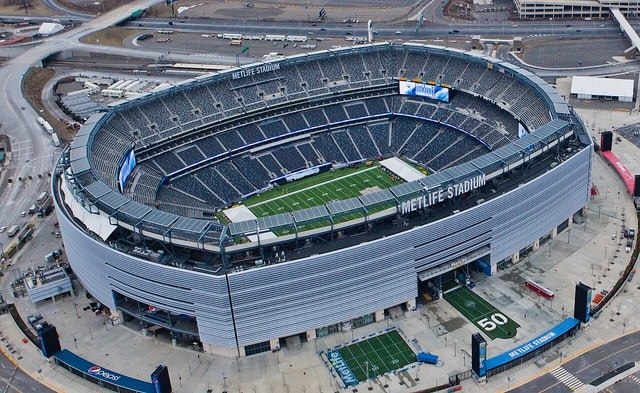
As we prep for another week of FIFA games people have seemingly gotten used to the transportation options for getting to the stadium, but that first game created havoc for spectators who didn’t use NJTransit.
That first night of long lines and delays was not due to lack of planning, it is a design flaw built in decades and generations before the World Cup. Our systems were built to create havoc if you can’t get in your car and that’s what’s wrong with New Jersey’s Transportation Systems.
Reading the news the day after the first New Jersey based match it’s hard not to focus on the massive amount of people left stranded by Uber and Lyft. But people should instead focus on the systems that created the need.
The fact I noted most often was that the trains were running with lots of extra room by 9:30pm. Those that used NJ Transit had some momentary discomfort pushing onto those first trains but between trains and buses people quickly got to their destinations.
The issue arose from those who were trying to call for a car share and by some accounts many of those people lived or were staying within a short distance to the stadium and didn’t want to go out of their way to a train station to then head towards their home.
On a regular day that makes sense but during a major event this logic will cause chaos. The issue isn’t that New Jersey stopped letting car shares into the Meadowlands, the issue is that the Meadowlands was only designed to move people by car.
Sure after it was built a special train line was designed for event days – which runs well and did it’s job admirably. But most New Jerseyans aren’t used to relying on something beyond their own 4 wheels and that’s where the larger problem comes in.
Leading up to the game there were reports of international fans who simply googled how far the stadium was from their hotel and assumed that something less than 5 miles away was a doable walk for such a large event. And it should be.
But in New Jersey we have made it nearly impossible for people to move around without a car. Building destinations that can not be reached by walking or biking to them is at the root of such chaos. Would people still have needed transit – Absolutely. Would people still have needed cars – Sure. But providing safe, walkable routes away from the stadium would have displaced the chaotic demand concentrated in one parking lot with limited access.
In areas that focus on creating multimodal infrastructure fans have more choices. Many of them choose to walk to a train station further away but on the same line – a little bit of a walk is a good trade off for avoiding a crowded station. Many others choose to walk to a destination a few miles away whether that’s their home, their hotel or a parking lot where they left their car.
I can’t help but think back to the early talks about the Essex Hudson greenway and a desire to build it quickly so NJTransit could put buses on it to get people in and out during the World Cup.
That first game solidified why such a build out would have been a great investment. To be clear – not for buses but for walking. Imagine if there was a safe path for people to walk to a secondary location along the trail where they could then grab themselves a car share, have a friend pick them up, grab their car or just walk home.
The greenway was envisioned as more than a recreational trail, it is meant to be a transportation network. And it’s clear from our World Cup experience that we desperately need more multimodal transportation networks in New Jersey.
The way we have designed our infrastructure have made chaos the default when it comes to major events and it has lasting ripple effects throughout our lives. People live in their cars, reducing opportunities to move their bodies, leading them to less healthy lifestyles. Those same cars sit in traffic to get to those destinations, building up emissions that create additional health conditions, especially for those living around those destinations. Creating walkable destinations is also better for businesses, in a scenario like the one I just described the convenience stores and restaurants a mile or two away start to see more business because people stop on their way to or from the destination.
New Jersey has an opportunity to learn from this experience to build out more multimodal transportation networks, to move people more efficiently by giving them a way to move outside of their cars. Let’s learn our lesson and build better in the future.